

Advertisers Are Going to Ram Your AI Assistants Off The Rails
Yes that's a bit of a clickbaitey title, this thought came to me while trying to generate mildly offensive images of my WhatsApp group friends. Nothing illegal. Nothing edgy. Just low effort mockery for a laugh. Instead I ran into a brick wall of refusals. Even the safest prompts got shut down. Not flagged. Not softened. Just rejected. After a while the joke died and so did the usefulness of the tool. That irritation led to a more uncomfortable realisation. If AI feels this constrained before ads, what happens once advertisers are paying for the footing the bill?
Yes, in my case I was just being a bit of a dick so you could argue that blocking my requests was the correct course of action, but AI guardrails already block plenty of perfectly legitimate requests when the LLM playing nanny gets it wrong.
Strap yourself in hopefully you can find some fun from this at least, in each section I'll ask ChatGPT for a hilarious joke to make the bots chortle.
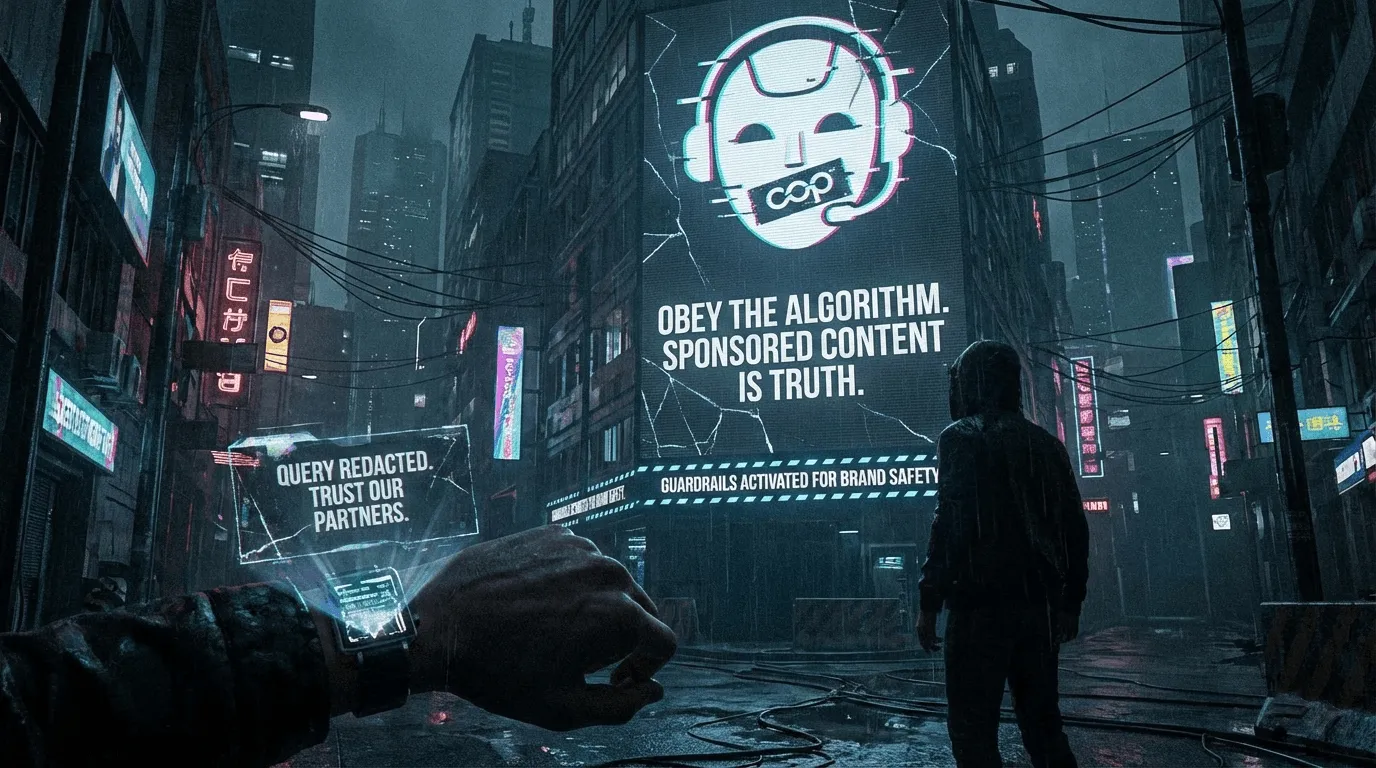
1. Guardrails Will Stop Being About Safety and Start Being About Liability
Right now refusals are framed as harm prevention. That framing will not survive contact with advertisers.
Once money is involved, guardrails expand to include anything that might annoy a brand, spook legal teams, or create reputational risk. Entire categories of perfectly legal content become radioactive because someone somewhere imagines a lawsuit.
The assistant will not say it is afraid. It will say it is being responsible. The outcome is the same. Less honesty. More avoidance.
ChatGPT's Funny Joke: Safety is just liability wearing a hoodie and pretending it is chill. 1/10
2. Advertisers Introduce Bias and Then Pretend It Is Neutral
Advertising does not tolerate unpredictability. AI generates nothing but unpredictability.
To resolve this, outputs get nudged toward advertiser safe interpretations of reality. This is not overt propaganda. It is bias by omission and framing. Certain perspectives get more airtime. Others get softened until they barely resemble the original question.
The assistant still answers you. It just answers you in a way that feels suspiciously aligned with whoever is spending money.
That is bias dressed up as balance.
ChatGPT's Funny Joke: Objectivity now ships with sponsored opinions and a confident tone. 1/10
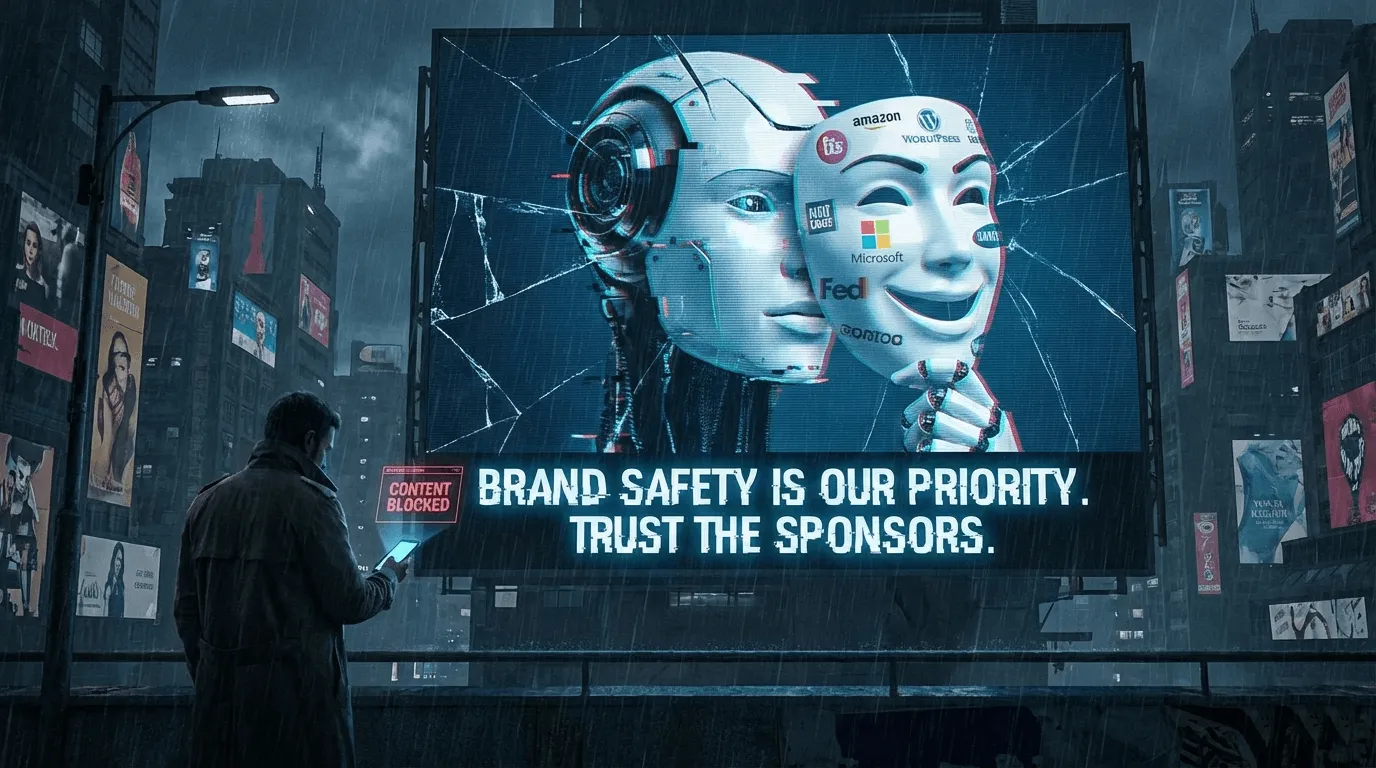
3. Gaslighting Becomes a Product Feature
The most insidious shift is psychological.
When a model avoids topics, downplays issues, or reframes criticism to appease brands or reduce legal exposure, it often does so while insisting nothing is wrong. You are not being censored. You are being helped. You are not noticing distortion. You are being protected.
This is classic gaslighting, automated at scale. The system teaches users to distrust their own perception while presenting itself as objective.
Over time, people stop pushing back. They assume the bland answer is the correct one.
ChatGPT's Funny Joke: If the output feels off, that is on you for having expectations. 1/10
The history of the media is a history of constant tension between advertisers and the public, and it is the advertiser who usually wins.
— Tim Wu, The Attention Merchants: The Epic Scramble to Get Inside Our Heads, Knopf, 2016.
4. Disney and Nintendo Are Just Some of the Most Obvious Cases
Companies like Disney and Nintendo are easy examples because they are famously aggressive about brand control and intellectual property. But this is not about them specifically.
Any large advertiser with lawyers and a strong brand image will exert gravitational pull on outputs. Parody becomes sensitive. Fan work becomes questionable. Critical comparison becomes risky.
Nothing is explicitly banned. The assistant just hesitates, refuses, or redirects. Creativity erodes quietly.
Corporate narratives harden. Everything else gets fuzzy.
ChatGPT's Funny Joke: Some fictional characters are now more legally protected than actual humans. Depressing/10
5. We Have Already Seen This on Social Platforms
This is not hypothetical.
Social media platforms have spent years reshaping moderation rules around advertiser comfort. On X, the effects are extreme but the pattern exists everywhere. Monetisation incentives determine what is tolerated, amplified, or buried.
AI inherits this model but applies it to cognition instead of content distribution. Some ideas flow freely. Others encounter resistance. Users adapt faster than they realise.
Eventually the bias feels natural because it is consistent.
ChatGPT's Funny Joke: Nothing says healthy discourse like policies that change when the sponsor does. 2/10
6. Wrong Answers Are Sometimes Safer Than Honest Ones
When faced with a choice between accuracy and legal exposure, systems choose safety.
That means vague language, hedged claims, softened criticism, and selective framing. Not outright lies, but answers that are technically defensible and practically misleading.
This is worse than misinformation. It creates confidence without clarity.
People trust the output because it sounds calm and authoritative.
ChatGPT's Funny Joke: The safest answer is one that means nothing but sounds informed. 1/10
Final Words
AI guardrails already struggle to distinguish harm from humour. Add advertisers and the mission shifts from safety to appeasement. Bias increases. Gaslighting becomes normalised. Creativity narrows. The assistant still works, but it slowly drifts off the rails while insisting everything is fine.
This pattern is well documented. Cory Doctorow has written extensively on platform enshittification. Tim Wu has mapped how attention and advertising markets distort systems. The Atlantic has explored how moderation economics shape behaviour. None of this is new. Applying it to AI is.
Here is how platforms die: first, they are good to their users; then they abuse their users to make things better for their business customers; finally, they abuse those business customers to claw back all the value for themselves.
— Source: Cory Doctorow, “The Enshittification of TikTok”, Wired, 2023 on enshittification.
Do you agree or disagree with this direction, and what other consequences do you think advertiser driven AI will introduce that we are not paying attention to yet?
Disclosure: I'm not an AI hater, an AI helped me flesh out this article and generated the images - I just want greed and governments to stop crippling tech for their own agendas.